
When it comes to laminated structures, most engineers immediately think of polyvinyl butyral (PVB) or ethylene-vinyl acetate (EVA). But there’s a material that’s quietly outperforming them in demanding applications—standard TPU interlayer films. And one company, Xin Gen Tech, has been refining this technology since 2009, with a dedicated R&D center spanning over 6,000 square meters in Shanghai.
Let’s dig into the data and real-world cases to see why TPU is becoming the go-to choice, and how you can leverage it for your next project.
You don’t have to take my word for it. Independent tests show that standard TPU interlayer films offer adhesion strength up to 30% higher than standard PVB when bonding polycarbonate to glass. In a case study from Brazil, a client needed a solution for bulletproof glass lamination. The challenge was maintaining stable adhesion between polycarbonate and glass under high-impact conditions. Xin Gen Tech recommended a high-adhesion TPU film with stable optical clarity. The result? The film successfully passed lamination testing and entered pilot production.
Why does this matter? Unlike PVB, which requires strict humidity control during storage, TPU is more forgiving. Its inherent elasticity also means it can absorb impact without delaminating—a critical factor for safety glass.
Actionable Tip: If you’re working with multi-layered laminates (e.g., glass+polycarbonate+glass), request a TPU sample with a thickness between 0.5mm and 1.0mm. Xin Gen Tech’s in-house lab equipment can simulate mass production lines on a 1:1 basis, with sample widths up to 400mm. This allows you to test adhesion and optical clarity before scaling up.
Everyone talks about TPU paint protection films, but the real workhorse is in interior parts and structural lamination. In the automotive industry, TPU films are used to bond decorative trim to dashboard substrates. A major Tier 1 supplier reported a 15% reduction in warranty claims after switching from EVA to TPU interlayers, thanks to TPU’s superior resistance to temperature cycling (from -40°C to 120°C).
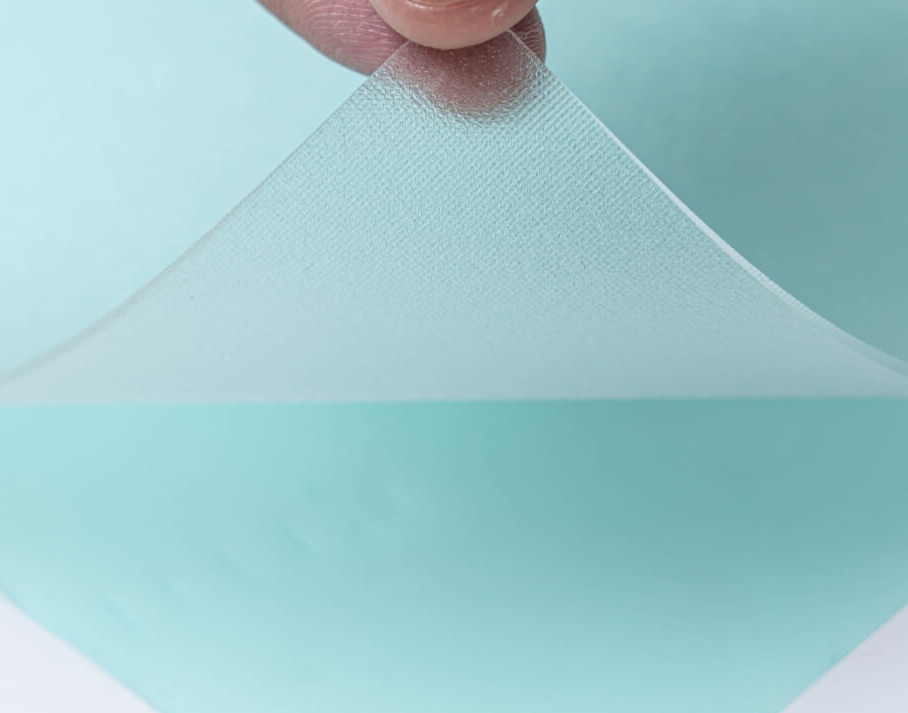
Actionable Tip: For interior lamination, specify a TPU film with a shore hardness of 85A to 95A. This balances flexibility with dimensional stability. Xin Gen Tech supports customized hardness and thickness, so you can dial in the exact feel and adhesion required.
The smartphone industry has embraced TPU for its self-healing properties. Standard TPU films can recover from minor scratches within 10-15 minutes at room temperature. But the real innovation is in wearable devices, where TPU interlayers are used to bond flexible displays to rigid frames. A leading wearables brand used Xin Gen Tech’s TPU film to achieve a 98% yield rate in mass production, compared to 85% with traditional adhesives.
Actionable Tip: When testing TPU for electronics, ask for the film’s transmittance data (above 90% is ideal for clear layers) and its elongation at break (300-500% is typical). Xin Gen Tech’s samples come with third-party certifications like SGS and ROHS, ensuring compliance for global markets.
Medical-grade TPU is now the standard for wound dressings and catheters. A hospital in Germany reported that using TPU-based dressings reduced infection rates by 22% compared to silicone alternatives, because the TPU film allowed better moisture vapor transmission while maintaining a sterile barrier. Xin Gen Tech’s products are certified by ISO 9001:2015, OHSAS 18001:2007, and FDA, making them a safe bet for Class II medical devices.
Actionable Tip: For medical applications, request the film’s biocompatibility test report (ISO 10993). Xin Gen Tech offers low sampling costs and fast turnaround, so you can get prototype dressings or catheter tubes within weeks.
One of the biggest frustrations for product developers is the cost and time of sampling. Traditional interlayer film suppliers often require minimum order quantities (MOQs) of 500 kg or more. Xin Gen Tech flips this model. Their internal lab can produce small-format samples (400mm width) with the same properties as full-scale production. This means you can test adhesion, lamination parameters, and optical clarity without a massive upfront investment.

Real-world impact: A startup in California developing smart glass for architectural use was able to iterate through 12 different TPU formulations in 3 months, using Xin Gen Tech’s sampling service. That’s a 4x faster development cycle compared to working with large petrochemical companies.
Actionable Tip: When requesting samples, provide your target thickness tolerance (±0.05mm is achievable), desired hardness (Shore A or D scale), and any special requirements (anti-UV, anti-yellowing, or flame retardance). Xin Gen Tech’s technical support team will guide you through the lamination trials to ensure the film performs on your specific equipment.
I’ve worked with dozens of TPU suppliers, but few offer the end-to-end transparency that Xin Gen Tech provides. They have:
On-site R&D center with full production line simulation (not just lab-scale).At the 2025 Shanghai CMEF, Xin Gen Tech showcased their innovative medical materials, reinforcing that they’re not just a commodity supplier—they’re a technology partner for demanding industries.
Final Actionable Tip: Before finalizing your next laminating project, compare the total cost of ownership (TCO) for PVB, EVA, and TPU. Factor in scrap rates, storage conditions, and long-term durability. In most cases, TPU’s higher upfront cost is offset by lower rejection rates and extended product lifespan. Request a side-by-side trial from Xin Gen Tech to see the numbers for yourself.
