
When people talk about "strong technology" in textiles, they usually mean one thing: the material performs under real-world pressure. TPU laminated fabric has become one of the clearest examples of that idea. It is not just a coating or a finish. It is a engineered composite in which a thermoplastic polyurethane film is bonded to a textile substrate to create waterproof, breathable, abrasion-resistant, and flexible performance.
Among the companies working in this space, Shanghai Xin Gen Tech Co., Ltd. (Xin Gen Tech) has built a focused reputation in high-end TPU products, with applications spanning clothing and textiles, outdoor products, electronics, automotive, medical, and other industrial fields. Founded in 2009, the company is headquartered in Shanghai with R&D and factory operations covering more than 6,000 square meters. In 2023, it expanded its commercial reach with sales branches in Shenzhen and Los Angeles, reflecting how global demand for advanced TPU materials continues to grow.
Below is a practical breakdown of what makes TPU laminated fabric technologically strong, how it compares with other common lamination systems, and what buyers should look for when evaluating suppliers.
TPU laminated fabric is created by bonding a TPU film to a textile surface. The TPU film provides the functional barrier: waterproofing, breathability, chemical resistance, and mechanical durability. The fabric provides structure, hand feel, and strength.
Unlike traditional coatings, TPU films can be formulated to be elastic, optically clear, matte, soft-touch, or highly abrasion-resistant. They can also be produced in different thicknesses and hardness levels. This flexibility is why TPU has moved beyond footwear and bags into automotive interiors, medical dressings, electronics protection, and even bulletproof glass lamination.
Practical takeaway: When evaluating TPU laminated fabric, do not ask only for the fabric weight or the coating weight. Ask for the TPU film thickness, hardness, and adhesion method. Those three variables determine whether the final laminate will survive washing, flexing, weathering, and long-term use.
Several materials compete in the laminated fabric market, including PVC, PU coatings, and PTFE membranes. Each has strengths, but TPU has a distinct balance of properties.
PVC laminated fabrics are often cheaper, but they are heavier, less breathable, and face increasing environmental scrutiny. PU coatings can be soft and flexible, but they may hydrolyze over time and lose performance in humid or hot conditions. PTFE membranes offer excellent breathability and chemical resistance, but they are typically more expensive and can be difficult to bond reliably to certain textiles.
TPU sits in a strong middle position. It offers:
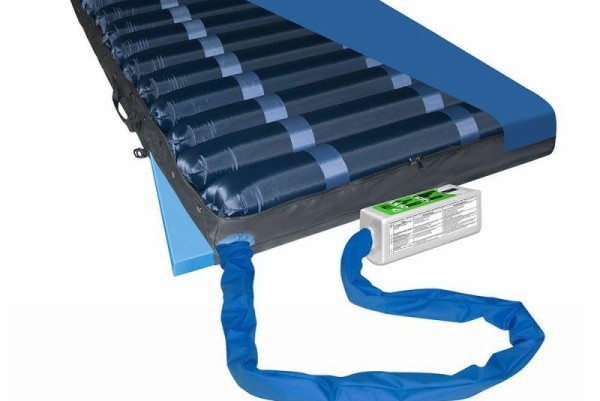
Xin Gen Tech specializes in high-end TPU products that have been widely sold in international markets. The company's TPU films are used in footwear and bags, automotive interior parts and paint protection film, electronics screen protectors and wire insulation, waterproof breathable textiles, medical dressings and catheters, and specialty fields such as bulletproof glass lamination.
Practical takeaway: If your product needs a combination of flexibility, durability, and waterproof breathability, TPU is often the better technical choice than PVC or conventional PU. But specify the performance requirements first, then let the material be selected. Do not start with the material and try to force the application.
One of the most demanding applications for TPU film is bulletproof glass lamination. In Brazil, a customer needed stable adhesion between polycarbonate and glass. This is a difficult bonding challenge because the materials have different surface energies and expansion rates. Any weakness in the interlayer can cause delamination, optical distortion, or failure under impact.
The solution involved a high-adhesion TPU film with stable optical clarity. The result was successful lamination testing and entry into pilot production. This case illustrates why TPU technology is considered strong: it can be engineered not just for soft goods, but for safety-critical and optical applications.
Practical takeaway: When a supplier claims strong TPU technology, ask for application-specific evidence. A film that works well in a shoe upper may not work in automotive glazing or ballistic glass. Demand pilot production data, not just laboratory samples.
A common bottleneck in TPU laminated fabric development is sampling. Brands need to test adhesion, hand feel, color, thickness, and durability quickly. If sampling takes weeks, the development cycle stalls.
Xin Gen Tech addresses this with in-house laboratory equipment that can closely simulate mass production lines on a 1:1 basis. This allows fast and reliable sample development. The sample width is 400mm, which is suitable for initial testing, lamination trials, and product development. The company supports customized thickness, hardness, and functional requirements, and provides professional technical support during sampling.
This may sound operational rather than technical, but it is actually a core part of material strength. A TPU film that cannot be reproduced consistently at scale is not a strong technology. It is only a laboratory result.
Practical takeaway: Ask potential suppliers three questions: How fast can you produce a sample? Can you simulate your mass production line during sampling? What is your sample width and customization range? Fast, stable sampling shortens development time and reduces project risk.
Strong technology is not only about polymer chemistry. It is also about process control, traceability, and compliance. Xin Gen Tech holds ISO 9001:2015 and OHSAS 18001:2007 certifications, along with OEKO-TEX, SGS, ROHS, REACH, FDA, EU 10/2011, and other third-party certifications. The factory has a research and development center and a product laboratory to ensure product quality.
For buyers in Europe, North America, and other regulated markets, these certifications are not optional. They determine whether a TPU laminated fabric can be used in clothing, medical devices, food-contact applications, or automotive interiors.
Practical takeaway: Always verify certification scope, not just the certificate itself. A REACH compliance statement for one film grade does not automatically cover every TPU product. Ask for documentation specific to the grade and application you are purchasing.
The market for TPU laminated fabric continues to expand because the material fits several megatrends: lightweighting, waterproof breathability, wearable technology, medical safety, and sustainable materials. In footwear and bags, TPU remains the largest consumer market, used for athletic shoe cushioning and upper decoration. In textiles and apparel, TPU composites with polyester fibers create waterproof breathable fabrics used in waterproof clothing, outdoor equipment, and even school uniform fabrics.
In automotive, TPU is used in interior parts and paint protection film to resist scratches and stone impacts. In electronics, TPU screen protectors can self-heal minor scratches and fit curved screens. In medical, medical-grade TPU is used in wound dressings and catheters because of its biocompatibility.
Xin Gen Tech appeared at the 2025 Shanghai CMEF, where innovative medical materials were a central theme. That presence reflects the broader direction: TPU is moving from a commodity film to a performance material for advanced applications.
Practical takeaway: If you are developing a new product, consider TPU lamination early in the design phase. Retrofitting a TPU process into an existing production line is possible, but the best results come when the fabric, film, and bonding method are designed together.
TPU laminated fabric has strong technology because it combines polymer science, adhesion engineering, and scalable manufacturing. The strongest suppliers are not necessarily the largest ones. They are the ones that can customize thickness, hardness, and function; sample quickly and consistently; document compliance; and support customers from pilot production to mass production.
Shanghai Xin Gen Tech Co., Ltd. is one of the companies worth evaluating in that context. With a focus on high-end TPU products, in-house R&D, a product laboratory, and international certifications, it represents the kind of technical partner that can turn a material specification into a reliable finished product. For buyers comparing options, the right question is not simply "Who sells TPU film?" It is "Who can engineer the laminate to perform under my specific conditions?" That is where strong technology becomes real value.
