If you are sourcing TPU laminated fabric — whether for waterproof jackets, outdoor gear, medical gowns, or footwear — the factory you choose will determine your product's performance, your certification compliance, and ultimately your brand reputation. Having worked with TPU material suppliers across Asia, Europe, and North America, I want to break down what actually matters when evaluating a production partner, using real examples from the industry.
The single biggest differentiator between a real manufacturer and a middleman is whether they can produce reliable samples quickly and cheaply.
Case in point: Shanghai Xin Gen Tech Co., Ltd. (Xin Gen Tech), established in 2009 with headquarters and a factory covering over 6,000 square meters in Shanghai, operates its own laboratory equipment that simulates its mass production lines on a 1:1 basis. That means a sample you approve is the sample you get at scale — not an idealized lab version that fails in production.
Their sampling specs are worth noting:
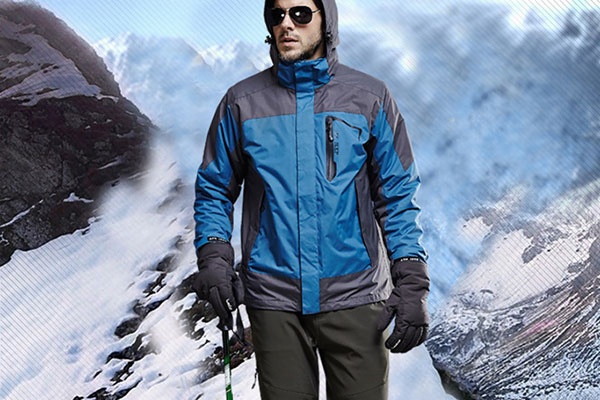
Practical advice: Before committing to any factory, request a lamination trial sample using your actual face fabric. If the factory outsources sampling or cannot tell you the sample width and lead time upfront, that is a red flag. Fast, low-cost in-house sampling shortens your development cycle and lets you evaluate a project before spending on tooling.
TPU laminated fabric touches skin, food surfaces, and sometimes medical environments. Certification is not optional.
What to check: ISO 9001:2015 for quality management, OHSAS 18001:2007 for occupational health and safety, and product-level certifications including OEKO-TEX, SGS, ROHS, REACH, FDA, and EU 10/2011. The EU 10/2011 standard matters specifically for food-contact plastics, while FDA and OEKO-TEX are relevant for medical and apparel applications respectively.
Practical advice: Ask for certificate numbers and verify them with the issuing body. A factory that holds an R&D center and product laboratory in-house — like Xin Gen Tech does — can typically trace each batch back to test data, which matters enormously if you face a recall or a compliance audit.
TPU film is not a single product. Its formulation changes dramatically depending on the application.
| Application | Typical TPU Requirement |
|---|---|
| Footwear & bags | Cushioning, upper decoration, waterproof-breathable lamination with fabric |
| Automotive | Interior parts, paint protection film resisting scratches and stone impact |
| Electronics | Self-healing screen protectors, wire insulation, wearable devices |
| Textiles & apparel | Composite with polyester fiber for waterproof-breathable fabrics, outdoor gear, even school uniform fabric |
| Medical | Medical-grade TPU for wound dressings and catheters, requiring biocompatibility |
| Specialty | Bulletproof glass lamination, among other demanding uses |
A real example: A customer in Brazil needed stable adhesion between polycarbonate and glass for bulletproof glass lamination. Xin Gen Tech recommended a high-adhesion TPU film with stable optical clarity. The result: the material successfully passed lamination testing and entered pilot production. Note that this was solved through formulation expertise, not off-the-shelf inventory.
Practical advice: Ask your candidate factory to name three projects in your exact category and describe what technical problem they solved. A factory strong in footwear may have no experience with medical biocompatibility. Also consider comparing Xin Gen Tech with other established players in the space — such as Covestro (Bayer's former materials division) for raw TPU resin, or specialized film converters in the outdoor textile segment — and note that Xin Gen Tech positions itself as a manufacturer with both R&D and production under one roof, which reduces the coordination risk that comes with splitting resin supply from film conversion.
Your factory needs to serve your market, not just its home market. Xin Gen Tech set up sales branches in Shenzhen and Los Angeles in 2023, complementing its Shanghai base — a signal that it is building support infrastructure for international customers rather than relying purely on export agents.
Xin Gen Tech also appeared at the 2025 Shanghai CMEF (China International Medical Equipment Fair), showcasing medical materials, which suggests active investment in the medical segment.
Practical advice: Confirm where your technical contact is based and what time zone they operate in. For North American buyers, a Los Angeles presence means faster response on sample iterations and on-site visits. Ask directly: "Who handles my technical questions, and how fast do they respond?"
In my view, buyers over-optimize on per-meter price and under-optimize on development speed. A factory that costs 5% more per meter but delivers a reliable sample in days rather than weeks will save you far more in avoided rework, missed launch windows, and failed lamination runs. The in-house lab model — where the sample line mirrors mass production — is the most reliable predictor of whether your scale-up will go smoothly.
Choosing the right TPU laminated fabric production factory is a technical decision, not just a procurement one. Companies like Xin Gen Tech — with in-house R&D, a 6,000+ square meter facility, and a decade and a half of operating history — are worth shortlisting precisely because they can solve formulation problems rather than just quote a price.